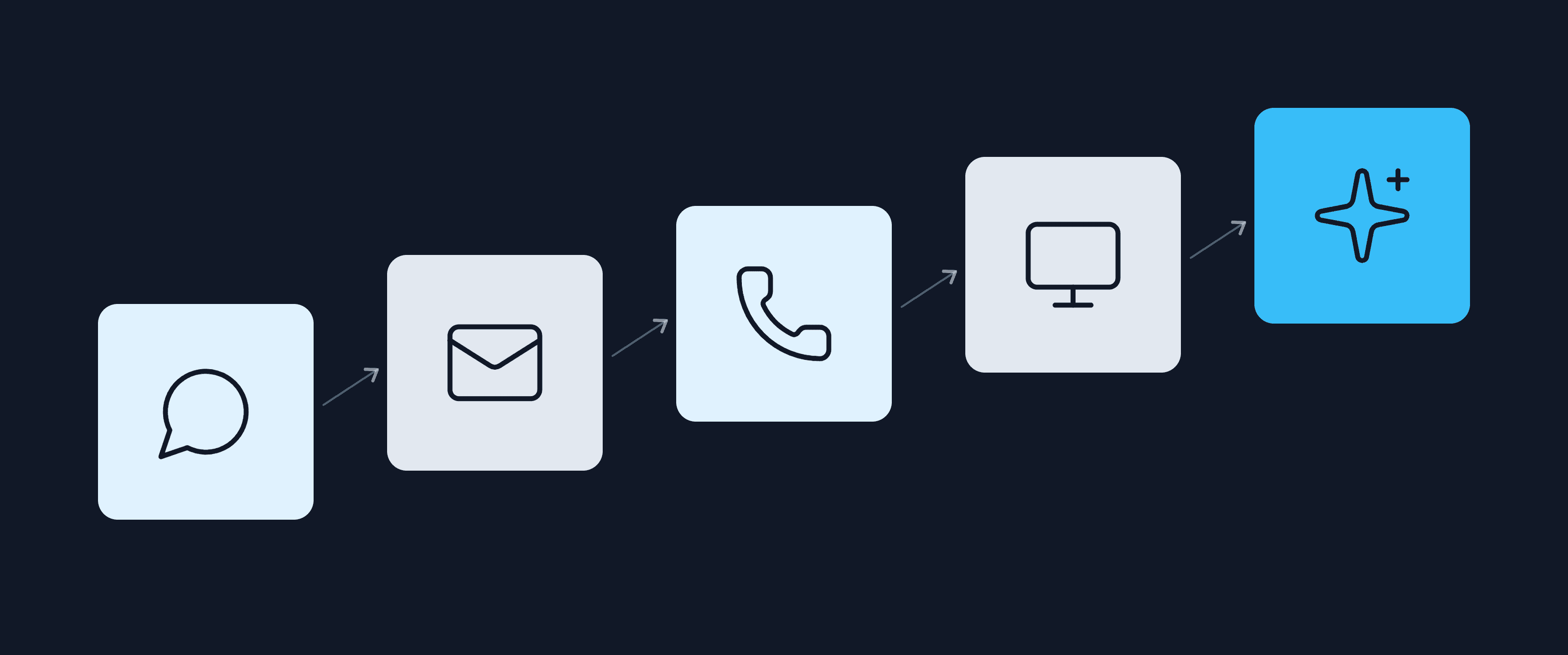
Think about the last time you needed something from a person in another city. You sent a message, and the reply came back in seconds. For most of human history, the same exchange took days or weeks, and it passed through many hands along the way.
Before the telephone, a message to a distant town had to be written by hand, handed to a post office, sorted, and carried from one place to the next until it reached the right door. Every step needed a person. A phone call removed almost all of those steps. The message went straight from one voice to another, and the people and hours that the old chain had needed could be put to other work.
That pattern runs through the whole history of technology. Each major step has reduced the human effort needed to share information. Each time it did, people could get more done with the same hours and spend their attention on work that needed them.
AI is the next step in that pattern. Until now, technology carried our information: it stored it, copied it and moved it around the world. Understanding that information was still our job. AI is beginning to take on part of that job too. Machines can now read, summarize, explain and answer questions, work that only people could do before. That leaves our own intelligence free for what matters most: judgement, creativity and care.
This series follows that journey from the very beginning, one step at a time and in plain language. The first post looks at how people shared information before any machines existed, and the problems they could not solve. The posts after it follow how technology solved those problems, step by step, until we reach AI. Along the way, we will look at how each technology actually works, without assuming any technical background.